Author: Nathan Jennison

Founder & Managing Broker, The Mortgage Architects · NMLS #2122717
Couple reviewing documents with a real estate agent, highlighting the guidance and support a buyer’s agent provides during the home buying process.

Navigating the Post-NAR Verdict Landscape: Why a Buyer’s Agent is Still Your Best Bet in Real Estate

Wondering how the NAR verdict changes things for you as a buyer or affects your real estate agent? The ruling not only imposes a $418 million settlement on the National Association of Realtors but also demands a shift in commission structures. In this article, we’ll cut straight to the heart of these changes, exploring how they affect your wallet, your options in the real estate market, and sound advice to protect your home purchase.

What happened— The $418M Settlement

In April 2024, the National Association of Realtors (NAR) agreed to a $418 million settlement. This settlement marks the end of longstanding regulations mandating that home sellers cover the commission costs for both their own broker and the buyer’s broker.

Illustration of a gavel and money to represent a court settlement related to inflated realtors commissions.

At the heart of the litigation was the practice of tying buyer and seller commissions together, primarily via Multiple Listing Services (MLS). This practice, some argue, has led to stifled competition and escalated fees in the real estate market.

How it will likely shake out for Real Estate Commissions

The verdict against NAR and other real estate organizations may lead to changes in the real estate industry. Some speculate that it will lead to more transparent real estate transactions, which could result in reduced costs for all parties involved.

Illustration of scales of justice to represent new rules and regulations in the real estate industry.

Increased Disclosures

Real estate agents will provide increased disclosure to their clients regarding compensation options. Additionally, displayed commission rates in online MLS databases may also be eliminated, furthering the push toward transparency in real estate transactions.

Competition Among Agents

The outcome of the antitrust lawsuit signals a potential increase in competition among agents and could lead to the development of a competitive pricing system that enhances service quality and delivers cost savings for consumers.

In the wake of the verdict, rising competition is expected to catalyze innovation and diversification in the services offered by real estate agents. Sellers are now advised to push for reduced commissions, aiming as low as 1.5% for listing agents, further highlighting the shifting dynamics in the real estate industry.

Negotiating Commission Rates

As part of the NAR settlement agreement, preset commission rates and shared commissions between buyers and sellers could be abolished. This move, supported by the trade group, paves the way for more flexible compensation models, giving consumers say in negotiating commission rates.

Tips for Homebuyers and Sellers in the Post-Verdict Market

Navigating the post-NAR verdict market might seem challenging, but understanding the changes and their implications can be empowering. Whether you’re a buyer or a seller, it’s critical to understand the value of a buyer’s agent, the importance of negotiating commission rates, and the evolving dynamics of the real estate market.

Many buyers are questioning whether they need an agent, especially when they might be responsible for the commission. However, a buyer’s agent does more than just show homes—they provide invaluable advice, negotiate on your behalf, and have an expert eye for potential problems in properties that you might overlook.

Expert Guidance

Having a buyer’s agent can be incredibly beneficial, providing expertise and guidance throughout the complex process of buying a home. Market knowledge is another area where buyer’s agents provide unmatched value. They understand local market trends, know what comparable homes are selling for, and can provide insights that help you make informed decisions. This expertise is particularly crucial in a shifting landscape, helping you to navigate the market confidently and successfully.

REALTOR® showing homes to home buyers and acting as a guide

Negotiating the Best Price

A Buyers Agent can help you negotiate the best price, spot potential issues with a property, and navigate the local market efficiently. In the post-verdict market, the role of buyer’s agents is more critical than ever, and their value cannot be underestimated. In a post-verdict world, where commission structures might change, a buyer’s agent’s negotiation skills are crucial. They’re not just about getting the price down; they also work to secure terms that benefit you, from repair agreements to closing costs. Furthermore, in a competitive market, having an agent who can strategize effectively can make the difference between securing your dream home and missing out.

REALTOR® showing client paperwork related to negotiations.

Largest Purchase with Protections

Would you represent yourself in a major legal battle? Likely not. Purchasing a home is one of the largest financial decisions you’ll make, involving contracts and negotiations that could have long-lasting implications. A skilled buyer’s agent acts as your advocate, ensuring your interests are protected throughout the entire transaction.

Homebuyer hand writing check for largest purchase they will make with the aid of a buyers agent post NAR verdict.

Finding Your Real Estate Ally

Choosing the right buyer’s agent is more important than ever. You need someone who is not just knowledgeable but also adaptable to the changes in the real estate industry post-verdict. Look for an agent who understands your needs, has a solid track record, and is committed to representing your best interests.

Remember, a good buyer’s agent will help you see beyond the surface of potential homes, pointing out issues or features you might miss, offering insights into the neighborhood, and providing guidance on the true value of a property. They’re your partner in the home-buying process, offering education and support every step of the way to ensure you make a decision that’s right for you.

In conclusion, despite the evolving landscape, the value of a buyer’s agent remains clear. They are not just facilitators but crucial advisors who can enhance your home-buying experience, provide strategic insights, and help you navigate the complexities of today’s real estate market. In the post-NAR verdict era, having a trusted buyer’s agent by your side is more important than ever.

new home buyers hugging in new home kitchen with trusted buyers REALTOR by their side post NAR verdict.

Negotiating Commission Rates

In the new landscape of real estate, commission rates are no longer preset. While there are standard commission rates in traditional real estate transactions, these are not fixed and can could be negotiated. Factors such as market strength, inventory levels, and the potential for future business can influence an agent’s willingness to negotiate their commission.

While negotiating commission rates is part of the new landscape, the value a skilled agent brings can often exceed the cost of their commission through better deal outcomes, saving money in other aspects of the purchase, or finding the right property more efficiently. It’s worth noting that the rates are often a reflection of the value, expertise, and complexity of the services provided by real estate agents.

In summary, while it’s important to negotiate commission rates, a real estate agent is a highly valuable partner in this complex transaction, and you don’t want to step over dollars to pick up dimes!

A realtor reviewing their commission rate post NAR verdict with prospective client home buyer.

Understanding the MLS System

The NAR settlement has sparked significant changes in the MLS system. Commission rates must now be explicitly agreed upon by buyers and their agents, and these rates will no longer be publicly displayed on online MLS databases.

Despite these changes, listing agents retain the ability to communicate buyer’s agent commission through their own websites or directly, maintaining a degree of flexibility in the system. The changes brought about by the NAR agreement could lead to a decline in transparency issues in the MLS system, enhancing buyer awareness of agents’ incentives.

Understanding the changes to the MLS system is crucial for homebuyers and sellers. It’s a new era of transparency and understanding, one that provides consumers with greater control and insight into their real estate transactions.

Summary

The NAR settlement represents a paradigm shift in the real estate industry, disrupting traditional commission structures and ushering in a new era of transparency and fairness. From the abolition of preset commission rates to the rise of competition among agents, the landscape is changing, and it’s essential to stay informed and adapt to these changes.

Frequently Asked Questions

What happened with NAR?

Answer: The National Association of Realtors (NAR) agreed to pay $418 million over four years to resolve all claims against the group by home sellers related to broker commissions. Additionally, NAR agreed to create a new rule prohibiting offers of compensation on the MLS. This agreement is pending court approval.

How can homebuyers and sellers navigate the post-verdict market?

Answer: Understanding the changes in the market and the value of a buyer’s agent can help homebuyers and sellers navigate the post-verdict market effectively. Negotiating commission rates is also important in this process.

How much can I save by using a buyer’s agent who negotiates effectively on my behalf?

Answer: The savings achieved through effective negotiation by a buyer’s agent can be substantial, but they vary based on the property, market conditions, and the specific terms of the deal. A skilled buyer’s agent doesn’t just negotiate the purchase price; they also work on other aspects of the deal, such as closing costs, repair credits, and contingencies, which can all lead to significant savings.

For example, if a buyer’s agent negotiates a $10,000 reduction on the purchase price of a $300,000 home, that’s an immediate 3.3% savings. If they also negotiate for the seller to cover $5,000 in closing costs, the total savings increase. Additionally, by identifying and negotiating repairs or improvements before the sale closes, an agent can save you even more, not just in money but also in future hassle.

It’s also worth considering the long-term impact of these negotiations. A lower purchase price means lower mortgage payments and potentially less interest paid over the life of the loan, contributing to substantial long-term savings.

What should I look for in a buyer’s agent to ensure they can negotiate effectively?

Answer: When choosing a buyer’s agent, look for someone with a strong track record of successful negotiations. They should have in-depth knowledge of the local market and a keen understanding of property valuation. Excellent communication skills, persistence, and the ability to think creatively and strategically are also crucial. It’s beneficial to choose an agent who comes highly recommended by past clients for their negotiation skills.

Can a buyer’s agent help me understand the true value of a home I’m interested in?

Answer: Absolutely. A buyer’s agent uses their expertise and access to market data to provide you with a comprehensive analysis of the home’s value. They consider comparable sales, the property’s condition, the local market trends, and other factors. This insight helps you make an informed decision on how much to offer and can serve as a strong foundation for negotiation.

IDR payment calculator showing how lowering student loan payments can increase home buying power, with savings and mortgage impact results displayed.

Navigating First-Time Buyers Through Student Loans and Market Dynamics

Realtors: Empower Your Clients for Success in Today’s Real Estate Market

Discover the intricate connections between student loans, market trends, and first-time homebuyers. As a real estate agent, your role extends beyond property transactions; it’s about guiding clients through complex decisions. This webinar is your key to becoming a trusted advisor who can confidently navigate these challenges.

To help first-time buyers move from education to action, share the New Home Buyer Checklist, walk them through the complete home-buying process, and help them choose the right mortgage brokerage for personalized loan guidance.

Smiling Hispanic family with their dog sitting outside their home, representing ITIN mortgage programs that support family homeownership.

Top ITIN Loan Programs: Find the Best Mortgage Lenders for ITIN Loans

Are you a non-US citizen looking to purchase a home but don’t have a Social Security Number (SSN)? ITIN mortgage loans might be the solution to your homeownership dreams. Discover fresh perspectives on ITIN loans and learn how they provide unique opportunities for non-US citizens to achieve their goals of owning a home in the United States. Download our ITIN brochure here.

Key Takeaways

  • ITIN loans provide an alternative path to homeownership for non-US citizens & their dependents.
  • Requirements include having a credit score in the high 600s, providing tax returns and proof of assets, and putting down a minimum 11% down payment.
  • Mortgage Architects are top lenders for ITIN loans with personalized guidance & Spanish language services available.

Understanding ITIN Loans: A Comprehensive Guide

ITIN mortgage loans are a specialized type of mortgage designed for people who have an Individual Taxpayer Identification Number (ITIN) instead of an SSN. These loans cater to non-US citizens, offering unique eligibility criteria and terms for homebuyers who possess an ITIN. So, even if you don’t have a Social Security Number, you can still qualify for an ITIN loan and step into the world of homeownership.

ITIN loans are available for both residents and non-residents who aren’t US citizens, as well as their spouses. This alternative form of financial help provides a path to homeownership for those without an SSN and their dependents. The mortgage process for ITIN loans is similar to that of traditional mortgages but with some additional requirements to consider.

How ITIN Loans Work

At their core, ITIN loans function like traditional mortgages. The main difference is that they cater to borrowers with ITINs instead of SSNs. They are considered non-qualified mortgages due to not meeting the lending guidelines set by the CFPB, which can result in higher costs for borrowers since they are deemed riskier. However, the ITIN mortgage program aims to help non-US citizens and residents without a Social Security Number achieve homeownership.

The terms and conditions of ITIN loans can differ depending on the lender and their policies. Some usual conditions include needing a down payment, possessing a taxpayer ID number instead of an SSN, and other terms that might apply. Keep in mind that not everyone qualifies for an ITIN loan, and mortgage rates for ITIN loans may be higher than those for conventional loans.

Despite their unique characteristics, itin home loans have proven to be a viable home financing option for non-US citizens. They provide many borrowers with the opportunity to purchase a home in the United States, and in doing so, help them build credit and establish a stable financial future.

ITIN Program Requirements

Certain program requirements must be met to qualify for an ITIN loan. The property you wish to purchase must meet the following criteria:

  • It must be a 1-4 unit primary residence
  • All borrowers will occupy the property
  • It must be a purchase or rate/term refinance (cash out not allowed)
  • High balance loan amounts and adjustable-rate mortgages are not permitted
  • The maximum LTV/CLTV/HCLTV is 95%.

In terms of eligibility, you’ll need to have enough income and assets, provide tax returns, show proof of assets, have been employed consistently for two years, have a credit score in the high 600s, and put down a minimum down payment of 11%. You can use ITIN loans to buy single-family homes, townhomes, condos, and multi-family dwellings.

ITIN Loan Eligibility Requirements

Specific requirements must be kept in mind concerning ITIN loan eligibility. To be eligible for an ITIN loan, the following criteria must be met:

  1. Verification is required for at least two non-traditional U.S. credit sources for each borrower on the loan who doesn’t have traditional credit.
  2. One of these non-traditional U.S. credit sources must be housing-related.
  3. The most recent consecutive 12-month payment history is required for each source of U.S. non-traditional credit.

These requirements aim to ensure that borrowers have a stable and verifiable financial background before being granted an ITIN loan. By verifying non-traditional credit sources and payment history, lenders can better assess the risk associated with lending to borrowers without traditional credit scores.

Top Mortgage Lender for ITIN Loans – The Mortgage Architects

A mortgage broker holding a house model above ITIN loan paperwork.

The Mortgage Architects emerge as one of the top mortgage lenders in the realm of ITIN loans. With experience in the ITIN mortgage program, they provide personal home buying guides to help borrowers navigate the process. They also have Spanish-speaking loan officers, making it easier for ITIN loan applicants who prefer to communicate in Spanish.

The Mortgage Architects is committed to providing the best possible mortgage experience for ITIN loan borrowers, including those seeking itin mortgages. By offering personalized guidance, experienced loan officers, and a user-friendly website in Spanish, they cater to the unique needs of ITIN borrowers and help them find the best mortgage lender for their situation.

Comparing Interest Rates and Terms

Comparing interest rates and terms is a vital part of searching for the best ITIN loan provider. Interest rates for ITIN loans can vary depending on the lender and the loan’s terms. Here are some key points to consider:

  • Rates typically range from around 7.375% to 8.750%.
  • ITIN loan interest rates might be higher than those for conventional or FHA loans.
  • Borrowers with limited credit history are seen as riskier, which can contribute to higher interest rates.

However, by comparing different lenders and loan options, you can find the best mortgage option for your unique financial situation. You should consider factors such as the loan term, interest rate, and any additional fees or charges when comparing ITIN loan providers.

Another aspect to consider when looking for an ITIN loan is refinancing options. Borrowers with ITIN loans may be eligible for a rate and term refinance to lower their interest rate or change the loan term. This can help borrowers secure better loan terms and potentially save money over the life of the loan.

Essential Documentation for ITIN Loan Applications

A family discussing their ITIN loan application documents

Having all the essential documentation ready contributes to a smooth ITIN loan application process. This includes:

  • Proof of income
  • Employment history
  • Tax returns
  • Credit history

Providing accurate and complete documentation, including bank statements, can help streamline the application process and increase your chances of loan approval.

Lenders typically require at least 12 months of consistent employment and may request additional documents to verify your income and assets. Ensuring that you have all the necessary paperwork organized and ready for submission can help prevent delays or rejection of your ITIN loan application.

Tips for Streamlining the Application Process

Being organized and submitting all required documentation promptly and accurately can streamline the ITIN loan application process. This can help increase your chances of loan approval and make the process smoother overall.

Some tips for streamlining the ITIN loan application process include gathering all necessary documents, such as proof of income, employment history, and tax returns, before applying. Additionally, it’s crucial to double-check your application for any errors or missing information before submitting it to the lender. By being organized and thorough with your application, you can help ensure a smooth and successful ITIN loan approval process.

Pros and Cons of ITIN Mortgage Loans

A couple discussing the pros and cons of ITIN loans

Borrowers should consider the benefits and drawbacks of ITIN mortgage loans when deciding if this type of loan suits their needs. On the one hand, ITIN loans provide expanded homeownership opportunities for non-US citizens who might otherwise have difficulty obtaining a traditional mortgage.

On the other hand, ITIN loans can come with potentially higher interest rates, larger down payments, and limited lender options compared to traditional mortgage loans. It’s essential for borrowers to weigh the pros and cons of ITIN loans to determine if they are the best option for their unique financial situation.

Benefits of ITIN Loans

One of the main benefits of ITIN loans is that they provide access to homeownership for non-US citizens who might not be eligible for traditional home loan options. ITIN loans offer more flexible credit requirements, making it easier for borrowers with limited credit history to qualify.

In addition to providing a path to homeownership, ITIN loans can also offer potential tax advantages for borrowers. By allowing non-US citizens to purchase a home in the United States and establish a credit history, ITIN loans can help borrowers improve their overall financial standing and potentially qualify for other loans in the future.

Drawbacks of ITIN Loans

Despite their benefits, ITIN loans also come with some drawbacks. One of the main downsides is that they can have higher interest rates than traditional mortgage loans, as they are considered riskier due to the limited credit history of borrowers. This can result in higher monthly payments and overall costs for borrowers over the life of the loan.

Another drawback is that ITIN loans may require larger down payments than traditional mortgages. Additionally, lender options for ITIN loans are limited, as not all lending institutions offer these types of loans. Despite these drawbacks, ITIN loans can still be a viable option for non-US citizens looking to purchase a home in the United States.

Tips for Improving Your Chances of ITIN Loan Approval

A family discussing the home buying process

Thorough preparation for the home buying process can improve your chances of ITIN loan approval. This includes building a solid credit history, saving for a down payment, and researching lender options that specialize in ITIN loans.

By understanding the unique requirements of ITIN loans and taking the time to gather all necessary documentation, borrowers can increase their chances of loan approval. Working with a knowledgeable lender who understands the ITIN loan process can also help guide borrowers through the application process and ensure a higher likelihood of success.

Preparing for the Home Buying Process

Understanding the specific requirements and gathering all necessary documentation are key when preparing for the home buying process with an ITIN loan. This includes:

  • Proof of income
  • Employment history
  • Tax returns
  • Credit history

Working with a knowledgeable lender who specializes in ITIN loans can help guide borrowers through the application process and ensure a higher likelihood of success.

By being proactive in gathering all required documents and understanding the unique requirements of ITIN loans, borrowers can set themselves up for a successful home buying experience. Taking the time to research lender options and work with a lender who understands the ITIN loan process can greatly improve the chances of loan approval and make the journey to homeownership a smoother one.

Refinancing Options for ITIN Loans

A house model sitting on top of an ITIN refiancne application with a stack of cash.

Borrowers looking to secure better interest rates or loan terms might find refinancing options for ITIN loans beneficial. Depending on eligibility requirements and financial goals, refinancing an ITIN loan can help lower monthly payments, get a better interest rate, or adjust the loan term.

By considering refinancing options, borrowers with ITIN loans can explore ways to improve their financial situation and potentially save money over the life of the loan. It’s essential to carefully evaluate the benefits and drawbacks of refinancing an ITIN loan to determine if it’s the right choice for your unique circumstances.

Eligibility Requirements for Refinancing

While eligibility requirements for refinancing ITIN loans may vary by lender, they typically involve considerations of credit history, income stability, and property value. Lenders will assess your capacity to pay back the loan, so providing evidence of income and employment is essential.

Property value can also affect eligibility for ITIN loan refinancing, as lenders usually have a maximum loan-to-value ratio they’ll refinance. By understanding the eligibility requirements for refinancing and working with a lender who specializes in ITIN loans, borrowers can explore the potential benefits of refinancing and make informed decisions about their financial future.

Summary

ITIN mortgage loans provide a unique opportunity for non-US citizens to achieve homeownership in the United States. With benefits like flexible credit requirements and potential tax advantages, ITIN loans can be a viable option for many borrowers. However, it’s crucial to weigh the pros and cons, such as potentially higher interest rates and limited lender options, before deciding if an ITIN loan is the right choice for you. By understanding the ITIN loan process, preparing for the home buying journey, and working with experienced lenders like The Mortgage Architects, you can take the first steps toward achieving your dream of homeownership in the United States.

Frequently Asked Questions

Can I get a loan with my ITIN number?

Yes, it is possible to get a loan with your ITIN number. Many financial institutions allow you to access personal loans, bank accounts and credit cards, giving you an opportunity to build a credit history in the US.

Who qualifies for an ITIN loan?

ITIN loans are ideal for non-resident aliens, foreign nationals and their spouses and dependents, who are not eligible for SSNs. To qualify, you’ll typically need a high credit score and a down payment of at least 11%.

What is a ITIN loan program?

ITIN loans are an available option for those without a Social Security number, enabling them to get a mortgage provided they meet certain eligibility criteria.

Can you get a Fannie Mae loan with an ITIN number?

Fannie Mae requires both a valid Social Security number and an ITIN for borrowers, so you can get a loan with an ITIN number.

What are the main benefits of ITIN loans?

ITIN loans provide non-US citizens with access to homeownership, flexible credit requirements, and potential tax advantages, making them an appealing option.

Student loan roadmap infographic showing three steps: optimize student loans, find the best mortgage, and achieve your dream home, illustrating how managing student debt can improve mortgage eligibility.

The Ultimate Guide to Managing Mortgage and Student Loan Debt

Owning a home is a dream for many, but what happens when you’re juggling both a mortgage and student loan debt? Fear not, because you’re not alone! With the right strategies and knowledge, you can successfully manage both mortgage and student loan payments and achieve the homeownership dream. In this comprehensive guide, we’ll explore mortgage products, income-driven repayment plans, and various mortgage programs designed to cater to borrowers with student loan debt. Let’s dive in and conquer this financial challenge together!

Key Takeaways

  • Understand how mortgage products treat student loan debt to get the best one for your finances.
  • Use income-driven repayment plans to lower monthly payments and increase purchasing power.
  • Create a budget, prioritize debt payments & explore refinancing options to manage both mortgages & student loans effectively.

Understanding How Mortgage Products Treat Student Loan Debt

A man reviewing his student loan debt and mortgage options

Different mortgage products treat student loan debt in various ways, which can greatly impact your ability to qualify for a mortgage loan. Lenders typically use your debt-to-income (DTI) ratio to determine your eligibility for a home loan. This ratio compares your monthly debt payments, including your student loan payments, to your gross monthly income.

For example, Fannie Mae counts 1% of the principal balance when calculating your DTI if the student loan is in deferment or forbearance. On the other hand, Freddie Mac and FHA use 0.5% of your student loan principal balance in their calculation when your student loans are not in repayment. A clear grasp on how varying mortgage products handle your student loan debt empowers you to select the most beneficial mortgage option tailored to your financial circumstances.

Using Income-Driven Repayment Plans

A person holding their income-driven repayment plan options

Income-driven repayment plans can be a game-changer for borrowers with federal student loans. These plans adjust your monthly payment based on your income and family size, making your federal student loan payments more manageable. This can help you qualify for a mortgage by lowering your monthly student loan payments, ultimately improving your debt-to-income ratio.

We will examine the ways in which income-driven repayment plans can aid in qualifying for a mortgage, reducing student loan payments, and potentially heightening your purchasing power.

Getting Qualified for a Mortgage with Student Loan Debt

Begin your journey to mortgage qualification with student loan debt by following these steps:

  1. Familiarize yourself with the mortgage products for which you’re eligible and their respective approaches to student loans in DTI computations.
  2. Consider adjusting your student loan repayment plan to minimize your DTI ratio.
  3. Request lenders to use your actual student loan payment, rather than the principal balance, in their calculations if your payments are lower than the calculated amount.
  4. This strategy could help you qualify for a higher mortgage amount.

With the right approach and a clear understanding of mortgage products, you can improve your chances of getting a mortgage while managing your student loan debt.

Lowering your Student Loan Payments with Income-Driven Repayment Plans

Lowering your student loan payments with income-driven repayment plans can result in significant monthly savings and improve your debt-to-income ratio. Modifying your monthly payment according to your income and family size can alleviate the pressure of your federal student loan debt.

This can free up more money for other financial goals, such as saving for a down payment on a home or investing in your future.

Increasing your Purchasing Power by Using Income-Driven Repayment Plans

Using income-driven repayment plans can increase your purchasing power by allowing you to qualify for mortgage products based on your income, family size, and employer type. Some loans that allow for federal student loan income-driven repayment plans to count towards reduced DTI include:

  • Freddie loans
  • Fannie loans
  • FHA loans
  • VA loans

Participating in these programs and cutting down your student loan payments allows you to allocate more of your monthly income to an equity-building mortgage, enhancing your purchasing power in the real estate market.

Understanding the Relationship Between Mortgage and Student Loan Debt

A scale holding student loan debt on one side and and mortgage options

Understanding the relationship between mortgage and student loan debt is essential for successful homeownership. Balancing both types of debt requires you to prioritize your financial goals and make informed decisions that align with your unique circumstances.

The upcoming sections will provide a deeper understanding of:

  • The influence of student loan debt on mortgage approvals
  • The significance of credit scores in deciding mortgage rates
  • The role of the debt-to-income ratio
  • The consequences of student loan repayment post-CARES Act.

The Impact of Student Loan Debt on Mortgage Approvals

Student loan debt can impact mortgage approvals by affecting your debt-to-income ratio and limiting the amount you can borrow. Lenders often use the actual monthly payment you make towards your student loans in their calculations. A significant monthly student loan payment can limit your ability to borrow for a mortgage because it causes your backend debt-to-income ratio to be too high.

However, there are legal methods to change your student loan payment in a way that benefits your home-buying goals, such as entering an income-driven repayment plan.

How Credit Scores Affect Mortgage Rates

Credit scores play a significant role in determining mortgage rates. A higher credit score can lead to lower interest rates, potentially saving you thousands of dollars over the life of your mortgage.

Managing your student loan debt responsibly can help improve your credit score, as payment history accounts for a significant portion of your overall credit score. By making timely student loan payments and maintaining a healthy mix of credit accounts, you can improve your credit score and secure better mortgage rates.

Debt-to-Income Ratio Explained

The debt-to-income ratio is a critical factor in mortgage approvals, as it measures your ability to manage monthly debt payments relative to your gross monthly income. Lenders typically prefer a maximum DTI of 43%, although some may accept up to 50%.

Managing your student loan debt, also known as student debt, can help keep your DTI ratio in check, ensuring that you can comfortably afford your mortgage payments and other financial obligations.

Student Loan Repayment Post-CARES Act

The end of the student loan payment pause under the CARES Act may require borrowers to explore repayment options, forgiveness programs, and other forms of relief. As payments resume, it’s crucial for borrowers to assess their financial situation and consider their options for managing both mortgage and student loan obligations.

The administration has introduced the SAVE Plan, which includes the following measures:

  • Decreasing the payment required on an income-driven payment plan
  • Increasing the income cap
  • Providing a “grace period” for borrowers unable to make payments when they become due

By staying informed and proactive, borrowers can navigate the post-CARES Act landscape with confidence.

Strategies for Balancing Mortgage and Student Loan Repayments

A couple discussing their student loan debt and mortgage options

Balancing mortgage and student loan repayments can be challenging, but it’s not impossible with the right strategies in place. In the following sections, we’ll discuss:

  1. The importance of prioritizing debt payments
  2. Exploring refinancing options for student loans and mortgages
  3. Creating a budget to effectively manage your debt obligations

Prioritizing Debt Payments

Prioritizing debt payments is a crucial strategy for managing your mortgage and student loan obligations more effectively. Concentrating on debts with the highest interest rates or the smallest balances enables you to:

  • Save on interest payments
  • Expedite your debt clearance
  • Free up more of your income to put towards other financial goals, such as saving for a down payment on a home or investing in your future.

Refinancing Options for Student Loans and Mortgages

Refinancing options for student loans and mortgages can help borrowers lower their interest rates and monthly payments. This can make it easier to manage both types of debt and free up more money for other financial goals. However, it’s essential to weigh the pros and cons of refinancing, as it could result in higher interest rates, loss of federal benefits, or reduced protections for borrowers.

Always consider your unique financial situation and goals before deciding to refinance.

Creating a Budget to Manage Debts

Creating a budget is essential for managing debts and ensuring financial stability while juggling mortgage and student loan payments. Monitoring your expenses, pinpointing potential savings areas, and modifying your spending habits allows for more efficient debt management and prioritization of your financial objectives.

Consider using budgeting tools and apps to help you stay organized and accountable as you work towards balancing your mortgage and student loan payments.

Mortgage Programs for Borrowers with Student Loan Debt

A person looking at their mortgage and student loan repayment options

Various mortgage lenders offer programs that cater to borrowers with student loan debt, including:

  • FHA loans
  • VA loans
  • USDA loans
  • Down payment assistance programs

These programs can provide flexible options and additional support to help borrowers manage their mortgage and student loan obligations.

In the following sections, we’ll explore the benefits of each program and how they can assist borrowers with student loan debt in achieving their homeownership goals.

FHA Loans for Borrowers with Student Loans

A visual representation of a mortgage loan and a stack of student loan documents, illustrating the connection between mortgage and student loan for FHA borrowers.

An FHA loan, backed by the Federal Housing Administration, offers flexible options for borrowers with student loans, including lower down payments and more lenient credit requirements. Understanding how FHA loans treat student loan debt in their DTI calculations can help you determine if this mortgage option is suitable for your financial situation.

Collaborating with an FHA-approved lender allows you to leverage the benefits of FHA loans and smoothly journey towards homeownership despite student loan debt.

VA and USDA Loans for Borrowers with Student Loans

VA and USDA loans provide additional mortgage options for borrowers with student loan debt. VA loans, backed by the Department of Veterans Affairs, are available to eligible veterans and active-duty military members. USDA loans, backed by the United States Department of Agriculture, cater to borrowers in rural areas. Both loan programs often have no down payment requirements, making homeownership more accessible for those with student loan debt.

By understanding the eligibility criteria and benefits of VA and USDA loans, borrowers can explore these mortgage options as a viable path to homeownership.

Down Payment Assistance Programs

Down payment assistance programs can help borrowers with student loan debt afford the upfront costs of homeownership. These programs provide grants, low-interest loans, or tax credits to reduce the amount needed for a down payment.

Collaborating with a lender to explore potential down payment assistance programs empowers borrowers with student loan debt to realize their homeownership dreams without the financial burden of a hefty initial payment.

Preparing for Homeownership with Student Loan Debt

A person looking at their mortgage and student loan repayment options

Preparing for homeownership with student loan debt involves building an emergency fund, improving credit scores, and assessing home affordability. In the following sections, we’ll discuss the importance of each step in ensuring that you can manage your mortgage and student loan obligations without financial strain.

Building an Emergency Fund

Building an emergency fund is crucial for managing unexpected expenses while juggling mortgage and student loan payments. Experts typically recommend:

  • Having three to six months’ worth of living expenses in an emergency fund
  • Establishing realistic savings goals
  • Making consistent deposits
  • Automating your savings

This enables the creation of a financial safety net, safeguarding you and your family from unexpected financial hurdles.

Improving Credit Scores

Improving credit scores can lead to better mortgage rates and terms, making homeownership more affordable for borrowers with student loan debt. Responsible management of your student loan debt and maintaining a balanced mix of credit accounts can bolster your credit score and result in more favorable mortgage rates.

Make timely student loan payments, avoid maxing out your credit cards, and regularly monitor your credit report for inaccuracies to ensure your credit score remains in good standing.

Assessing Home Affordability

Assessing home affordability is essential for ensuring that you can manage your mortgage and student loan obligations without financial strain. When determining home affordability, take into account factors like:

  • Your income
  • Your credit score
  • Your debt-to-income ratio
  • Your savings for down payments

Use online tools and calculators to estimate your monthly mortgage payment and explore different mortgage programs to find the best fit for your financial situation.

Summary

In conclusion, managing mortgage and student loan debt may seem daunting, but with the right strategies and knowledge, homeownership is within reach. By understanding how different mortgage products treat student loan debt, utilizing income-driven repayment plans, and exploring various mortgage programs, you can navigate the path to homeownership with confidence. Don’t let student loan debt hold you back from achieving your dream of owning a home. With careful planning, prioritizing debt payments, and assessing home affordability, you can make homeownership a reality even with student loan debt.

Frequently Asked Questions

Does having student loans affect getting a mortgage?

Having student loans can make it harder to qualify for a mortgage, since lenders consider your debt-to-income ratio as part of their evaluation. To improve your chances of qualifying, pay off other debts and make sure your student loan payments are up to date.

Can I put my student loans into my mortgage?

Yes, you can put your student loans into your mortgage if you have the right loan and enough equity in your home.

Can I use my student loans to pay mortgage?

Unfortunately, you cannot use your student loans to pay for your mortgage as this is not an approved use of such loans. However, if you owned a home before taking on the cost of college tuition, you may be eligible.

Can you be denied a mortgage because of student loans?

Having student loan debt can make getting a mortgage more difficult, as lenders consider your current debt, credit score, and payment history. However, making student loan payments on time can actually help your credit scores, which makes it possible to obtain a mortgage with student loan debt.

What are some mortgage programs available for borrowers with student loan debt?

Borrowers with student loan debt can take advantage of mortgage programs such as FHA, VA, USDA loans, and down payment assistance programs.

Man reviewing financial documents at a laptop in a modern office, preparing for student loan repayment planning.

Navigating the Financial Waters: Preparing for Student Loan Repayment Post-CARES Act

As we steer through the latter half of 2023, many homeowners are finding themselves facing an imminent rise in monthly expenses. The pause on federal student loan payments, initiated by the CARES Act in March 2020, has been a crucial financial relief during the turbulent times of the pandemic. However, with the payment pause ending on August 29, 2023, and interest resuming from September 1, the reality of restarting monthly payments is quickly approaching.

Understanding the Impending Expense 🌊

For many families, the resumption of student loan payments could signify tighter budgets and potential financial strain. The additional monthly expenditure might even stretch finances thinly, especially for homeowners juggling mortgages, utility bills, and possibly, credit card debts.

  • Student Loan Resumption: Payments resume in October 2023, marking the end of the administrative forbearance provided by the CARES Act.
  • Interest Accumulation: Starting from September 1, 2023, interest on federal student loans will begin to accumulate, adding to the total debt amount.
  • Potential Credit Impact: Missing payments or falling into delinquency can adversely affect your credit score, which in turn can impact your mortgage rate or eligibility for refinancing.

Protecting Your Financial Future 🛡️

Fortunately, there are pathways to ease this financial transition and manage the upcoming student loan payments effectively.

  • Adjusting Your Payment Plan: Federal student loan programs offer Income-Driven Repayment Plans that can adjust your monthly payments according to your current income, significantly reducing the financial burden.
  • Exploring Forgiveness Programs: There are various Student Loan Forgiveness Programs available, like the Public Service Loan Forgiveness or Teacher Loan Forgiveness Program, which homeowners might be eligible for but might not be aware of.
  • Warning Against Private Consolidation: It’s essential to beware of companies offering to consolidate federal student loan debt into private loans. This switch can rob you of federal protection programs designed to help reduce or even forgive student loan payments.
  • Beware of Scammers: In times of change, scammers prey on uncertainty. Be vigilant for offers that seem too good to be true, such as promises of immediate loan forgiveness or claims that you can only consolidate your loans through their services. These schemes often ask for payment upfront or private information—red flags you should watch out for.

Refinancing: A Viable Option? 🔄

For homeowners with mounting credit card debt, adjustable rate lines of credit, and a low mortgage rate, evaluating the total expenses and the blended interest rate on that debt is crucial. Refinancing might seem like a tempting solution but remember, it might not be the answer for everyone.

Empowering Your Financial Journey 🌈

It’s vitally important to review all your financial numbers, do the math, and understand all the options available to you. This is where I come in. I offer resources to significantly reduce student loan payments by tailoring them to your current financial situation. Together, we can explore all avenues, ensuring you make informed financial decisions that safeguard your family’s financial health and well-being.

Let’s get ahead of this financial curve and ensure a smooth transition as we adapt to the changes in student loan repayment dynamics. For a deep dive into balancing your home-buying goals with existing student loans, check out our Ultimate Guide to Managing Mortgage and Student Loan Debt. There’s no easy answer to managing increasing expenses, but with a comprehensive understanding of your options, we can offer peace of mind and avoid financial surprises in the near future. Reach out today, and let’s embark on this financial journey equipped with the right knowledge and resources.

Smiling couple meeting with a mortgage broker, discussing home loan options over coffee.

Should I Use a Mortgage Broker? A Broker-vs.-Bank Guide

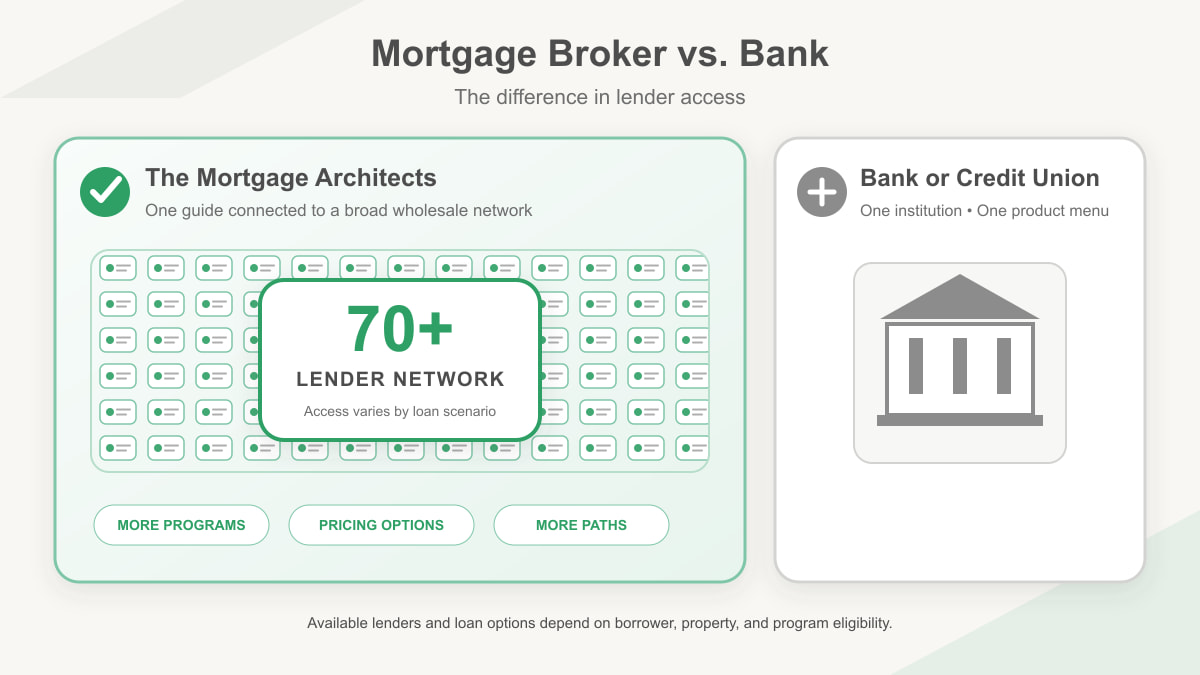
Yes—a mortgage broker can be a smart choice if you want to compare multiple lenders, need help with a less-than-simple financial situation, or value a guide who can explain your options clearly. A bank may be a good fit if you already have a strong relationship there and its loan products meet your needs.

The real question is not whether a mortgage broker or bank is always better. It is which option gives you the right combination of loan choices, transparent costs, responsive service, and confidence in the process. For Denver and Colorado borrowers, local market knowledge and the ability to move quickly can matter just as much as the interest rate. If your planned loan may exceed the county threshold, check the 2026 conforming and jumbo loan limits by county before comparing lenders.

Mortgage Broker vs. Bank: The Quick Comparison

What to compareMortgage brokerBank or credit union
Loan accessCan compare programs from multiple lenders, including some wholesale lendersOffers products from one financial institution
GuidanceHelps match your goals and financial profile with potential lendersA loan officer represents the bank or credit union that employs them
Complex situationsMay have more options for self-employed borrowers, investors, credit challenges, or nontraditional incomeCan work well when you fit the institution’s standard guidelines
CostsBroker compensation may be paid by the lender or borrower and should be disclosedOrigination and other lender costs may be charged directly or reflected in pricing
ConvenienceOne point of contact can comparison-shop and coordinate with different lendersFamiliar online banking and an existing relationship may be convenient

Neither column automatically wins. Compare the complete offer—including the interest rate, annual percentage rate, lender credits, origination charges, closing costs, cash needed to close, and service you will receive.

What Does a Mortgage Broker Do?

A mortgage broker acts as a liaison between a borrower and potential lenders. The broker learns about your goals, income, credit, assets, property, and timeline, then identifies mortgage options that may fit. The broker can help you understand the fine print, prepare the loan application, gather documents, and keep communication moving until the loan closes.

A broker does not directly fund the home loan. The selected mortgage lender underwrites and funds it. That distinction is important: the broker shops among various lenders, while a direct lender makes an approval decision using its own loan programs and guidelines.

Mortgage Broker vs. Loan Officer

A bank loan officer represents one lender. Even an excellent loan officer can offer only the mortgage products available through that financial institution. Mortgage brokers work with multiple lenders, so they can compare more than one path before recommending a loan.

That broader view may help when lenders price loans differently or apply different requirements to the same borrower profile. It can also reduce the time you spend completing separate inquiries with one bank after another.

Benefits of Using a Mortgage Broker

More Lender Access and Competitive Options

One of the main benefits of using a mortgage broker is access. A broker may work with many lenders, including wholesale lenders that do not accept loan applications directly from consumers. That can create more opportunities to compare mortgage rates, loan terms, lender credits, and eligibility requirements.

More options do not guarantee a better deal, but they make meaningful comparison shopping easier. The right mortgage broker should explain why a recommended loan fits your goals—not simply present the lowest advertised rate.

Help for Self-Employed and Complex Borrowers

A mortgage is rarely “one size fits all.” Self-employed buyers, real estate investors, borrowers with student debt, people rebuilding credit, and families using nontraditional income may not fit neatly into one bank’s preferred box.

Mortgage brokers can compare loan programs and lender guidelines before sending an application down the wrong path. That does not mean every situation will qualify today. It means you can receive an honest assessment, possible alternatives, and a practical plan for what to do next. There are no bad questions and no need to have perfect finances before starting the conversation.

One Guide Through the Mortgage Process

A good broker helps coordinate the moving parts of a home purchase: the loan application, documentation, disclosures, appraisal, underwriting questions, title work, real estate agent communication, and closing timeline. That time-saving assistance can be especially valuable for first-time buyers or anyone balancing a move, work, and family.

You still make the decisions. The broker’s role is to turn a complicated process into clear choices and actionable next steps.

How Much Does a Mortgage Broker Cost?

Mortgage broker fees and compensation vary. Depending on the loan and fee structure, the broker may be paid by the lender or the borrower. The cost should be explained before you commit and disclosed in your loan documents.

Do not compare a broker fee in isolation. Banks, credit unions, retail lenders, and mortgage brokers can structure rates, origination charges, points, and lender credits differently. A loan with fewer upfront fees may carry a higher rate, while paying points may lower the rate but increase the cash needed at closing.

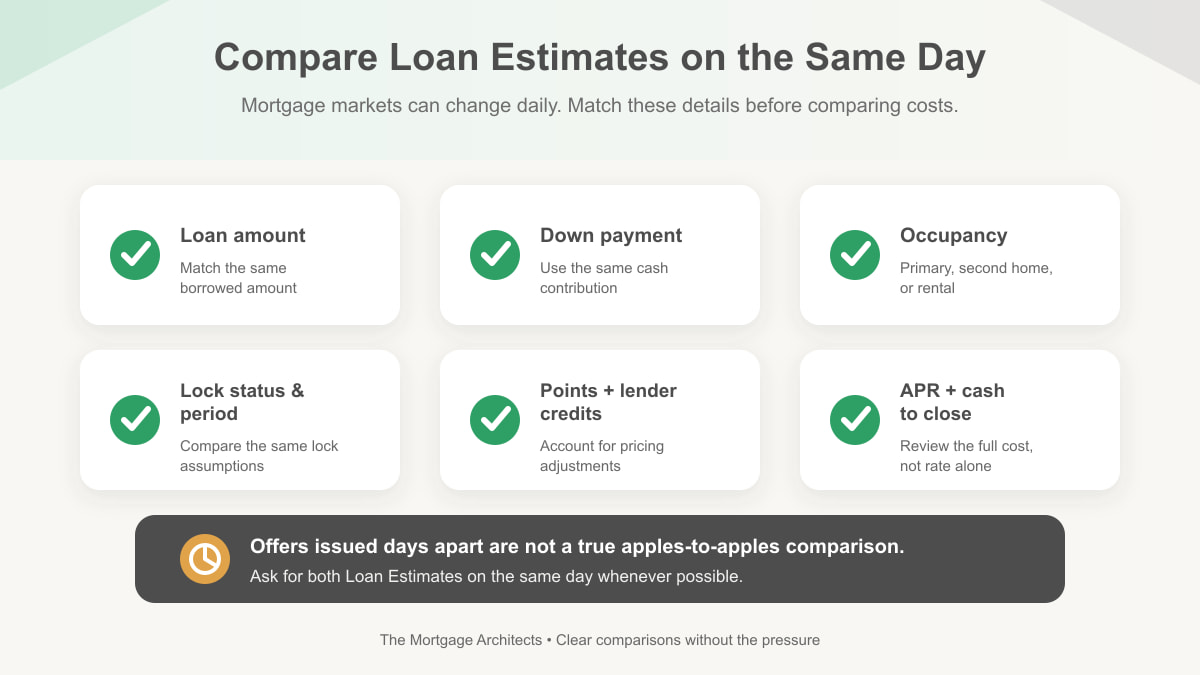
Use the Loan Estimate for an Apples-to-Apples Comparison

Ask for a Loan Estimate when you are ready to compare formal offers. Review the same loan type, down payment, lock period, and point structure. Then compare:

  • Interest rate and annual percentage rate
  • Origination charges and broker compensation
  • Discount points and lender credits
  • Estimated closing costs and cash to close
  • Mortgage insurance, when applicable
  • Prepayment penalties or other important loan terms

If anything is unclear, ask. A trustworthy mortgage professional will walk through the numbers without pressure or hidden fees.

Who Is a Good Fit for a Mortgage Broker?

Using a mortgage broker may make sense when you:

  • Want one professional to compare multiple lenders
  • Are self-employed or have variable, commission, or nontraditional income
  • Are buying an investment property or second home
  • Have credit concerns or a past financial setback
  • Need FHA, VA, conventional, jumbo, or other loan options compared
  • Value personal guidance and fast communication
  • Want a plan even if you are not ready to buy immediately

When Going Directly to a Bank May Make Sense

A bank or credit union may be the right lender if it offers a relationship discount, a specialized portfolio loan, or a competitive option that clearly fits your needs. Some borrowers also prefer keeping financial services under one roof.

You do not have to decide based on assumptions. Compare the bank’s offer with a broker’s options and evaluate the full cost, responsiveness, and fit.

Why Local Denver and Colorado Experience Matters

Colorado buyers often compete on more than price. A strong preapproval, a realistic timeline, and quick answers can help your offer stand out in the Denver real estate market. Local experience also helps when coordinating with Colorado real estate agents, appraisers, title companies, and property-specific requirements.

The Mortgage Architects combines wholesale lender access with local, personal service from its Denver office. You get a mortgage guide who understands the market and stays available when decisions need to happen—not a call-center handoff every time you have a question.

Meet Nathan Jennison, Founder and Managing Broker

Nathan Jennison founded The Mortgage Architects to create a more transparent, judgment-free mortgage experience. His approach is conversational but grounded in expertise: understand the borrower’s real goals, compare workable solutions, explain the tradeoffs, and build a plan that supports homeownership and long-term wealth.

Nathan is licensed in Colorado and several other states and works with first-time buyers, repeat homeowners, investors, and borrowers whose finances do not fit a typical banking box. The goal is not to push every person into a loan. It is to help you understand what is possible and what next step makes sense.

What to Look for in Reviews

Online reviews can help you choose the right mortgage broker, but look beyond the star rating. Read what clients say about communication, clear explanations, responsiveness, problem-solving, and whether the broker delivered on the promised timeline. Those details reveal more than a generic compliment.

When you review feedback about The Mortgage Architects, pay attention to the experiences of borrowers whose goals or challenges resemble yours. Then bring your own questions to a consultation.

Questions to Ask Before Choosing a Mortgage Broker

  • How many lenders do you work with, and how will you narrow my loan options?
  • Who pays your compensation, and where will I see it disclosed?
  • Which loan types fit my situation, and what are the tradeoffs?
  • How will you compare the rate, APR, points, credits, and closing costs?
  • What documents will I need for the loan application process?
  • Who will update me during underwriting, and how quickly do you respond?
  • What happens if the first lender cannot approve the loan?

The best broker will welcome these questions and give direct, understandable answers.

What Working With a Mortgage Broker Looks Like

The process begins with a conversation about your goals—not a sales pitch. You will discuss the property, timing, down payment, income, credit, current debts, and any concerns that could affect the loan. From there, Nathan can explain which loan types and potential lenders deserve a closer look.

When you decide to move forward, you will complete a loan application and provide supporting documents. The broker compares available options, explains the differences, and helps you choose a path. After you receive disclosures and select a lender, the file moves through processing, appraisal, and underwriting. The Mortgage Architects stays involved to answer questions, coordinate requested documents, and communicate with your real estate agent and other closing partners.

A preapproval is not the finish line. Rates, property details, and lender requirements can change during the mortgage process, so clear communication matters. The goal is to spot roadblocks early, keep the file moving, and make sure you understand each major decision before the loan closes.

Frequently Asked Questions

Is It Better to Use a Mortgage Broker or a Bank?

A mortgage broker may be better when you want multiple lenders compared or need a more flexible strategy. A bank may be better when its own product, relationship pricing, and service are clearly competitive. Compare written offers instead of relying on a general rule.

Is There Any Reason Not to Use a Mortgage Broker?

A broker may not add value if you already have a strong direct-lender offer that fits your needs. Some lenders also do not work through brokers. Always understand the broker’s fee structure, lender access, and potential conflicts of interest before proceeding.

At What Point Should I Talk to a Mortgage Broker?

Start as soon as you have a property goal—even if you think buying is months away. An early conversation can clarify your budget, identify documentation needs, correct common assumptions, and give you time to improve your options without last-minute pressure.

Can a Mortgage Broker Help if I Am Self-Employed?

Yes. A broker can review how lenders may evaluate business and personal income, identify the documents you will need, and compare loan programs. Approval still depends on the lender’s guidelines and your full financial profile.

Does a Mortgage Broker Guarantee the Lowest Rate?

No mortgage professional can guarantee the lowest rate in every market or situation. Rates change, and the lowest headline rate may come with points or terms that do not fit your goals. Focus on the complete loan offer and the quality of guidance.

Get a Clear Mortgage Comparison—Without the Pressure

You do not need perfect finances or all the answers before asking for help. The Mortgage Architects offers a judgment-free place to explore your options, compare a mortgage broker vs. bank, and leave with a practical plan.

Schedule a consultation with Nathan Jennison to discuss your home purchase, refinance, or investment goals. Come as you are—we will help you understand what is possible and what you can do next.