
Yes—a mortgage broker can be a smart choice if you want to compare multiple lenders, need help with a less-than-simple financial situation, or value a guide who can explain your options clearly. A bank may be a good fit if you already have a strong relationship there and its loan products meet your needs.
The real question is not whether a mortgage broker or bank is always better. It is which option gives you the right combination of loan choices, transparent costs, responsive service, and confidence in the process. For Denver and Colorado borrowers, local market knowledge and the ability to move quickly can matter just as much as the big bank name. If your planned loan may exceed the county threshold, check the 2026 conforming and jumbo loan limits by county before comparing lenders.
Mortgage Broker vs. Bank: The Quick Comparison
| What to compare | Mortgage broker | Bank or credit union |
|---|---|---|
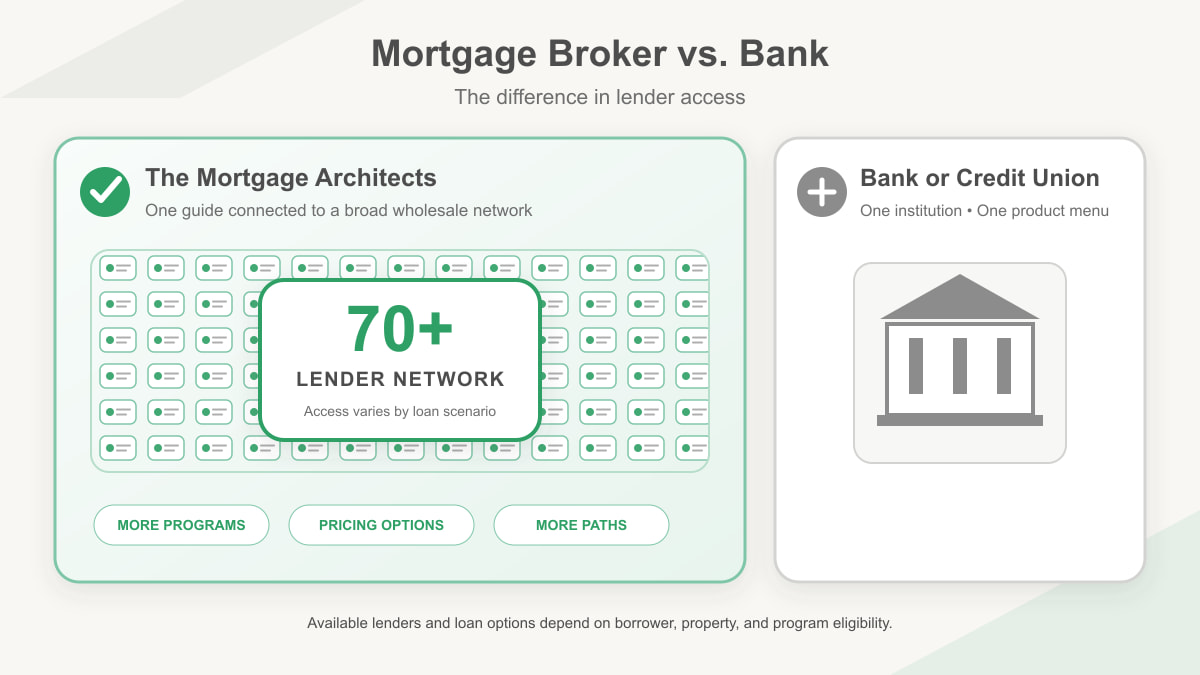
| Loan access | Can compare programs from multiple lenders, including some wholesale lenders | Offers products from one financial institution |
| Guidance | Helps match your goals and financial profile with potential lenders | A loan officer represents the bank or credit union that employs them |
| Complex situations | May have more options for self-employed borrowers, investors, credit challenges, or nontraditional income | Can work well when you fit the institution’s standard guidelines |
| Costs | Broker compensation may be paid by the lender or borrower and should be disclosed | Origination and other lender costs may be charged directly or reflected in pricing |
| Convenience | One point of contact can comparison-shop and coordinate with different lenders | Familiar online banking and an existing relationship may be convenient |
Neither column automatically wins. Compare the complete offer—including the interest rate, annual percentage rate, lender credits, origination charges, closing costs, cash needed to close, and service you will receive.
What Does a Mortgage Broker Do?
A mortgage broker acts as a liaison between a borrower and potential lenders. The broker learns about your goals, income, credit, assets, property, and timeline, then identifies mortgage options that may fit. The broker can help you understand the fine print, prepare the loan application, gather documents, and keep communication moving until the loan closes.
A broker does not directly fund the home loan. The selected mortgage lender underwrites and funds it. That distinction is important: the broker shops among various lenders, while a direct lender makes an approval decision using its own loan programs and guidelines.
Agente hipotecario frente a gestor de préstamos
A bank loan officer represents one lender. Even an excellent loan officer can offer only the mortgage products available through that financial institution. Mortgage brokers work with multiple lenders, so they can compare more than one path before recommending a loan.
That broader view may help when lenders price loans differently or apply different requirements to the same borrower profile. It can also reduce the time you spend completing separate inquiries with one bank after another.
Benefits of Using a Mortgage Broker
More Lender Access and Competitive Options
One of the main benefits of using a mortgage broker is access. A broker may work with many lenders, including wholesale lenders that do not accept loan applications directly from consumers. That can create more opportunities to compare mortgage rates, loan terms, lender credits, and eligibility requirements.
More options do not guarantee a better deal, but they make meaningful comparison shopping easier. The right mortgage broker should explain why a recommended loan fits your goals—not simply present the lowest advertised rate.
Already Have a Bank Quote or Loan Estimate?
Send it to The Mortgage Architects for an apples-to-apples review of the rate, APR, points, lender credits, cash to close, and loan structure. You’ll get a clear explanation of where the offer is strong and what may be worth comparing—without pressure.
Help for Self-Employed and Complex Borrowers
A mortgage is rarely “one size fits all.” Self-employed buyers, real estate investors, borrowers with student debt, people rebuilding credit, and families using nontraditional income may not fit neatly into one bank’s preferred box.
Mortgage brokers can compare loan programs and lender guidelines before sending an application down the wrong path. That does not mean every situation will qualify today. It means you can receive an honest assessment, possible alternatives, and a practical plan for what to do next. There are no bad questions and no need to have perfect finances before starting the conversation.
One Guide Through the Mortgage Process
A good broker helps coordinate the moving parts of a home purchase: the loan application, documentation, disclosures, appraisal, underwriting questions, title work, real estate agent communication, and closing timeline. That time-saving assistance can be especially valuable for first-time buyers or anyone balancing a move, work, and family.
You still make the decisions. The broker’s role is to turn a complicated process into clear choices and actionable next steps.
How Much Does a Mortgage Broker Cost?
Mortgage broker fees and compensation vary. Depending on the loan and fee structure, the broker may be paid by the lender or the borrower. The cost should be explained before you commit and disclosed in your loan documents.
Do not compare a broker fee in isolation. Banks, credit unions, retail lenders, and mortgage brokers can structure rates, origination charges, points, and lender credits differently. A loan with fewer upfront fees may carry a higher rate, while paying points may lower the rate but increase the cash needed at closing.
Use the Loan Estimate for an Apples-to-Apples Comparison
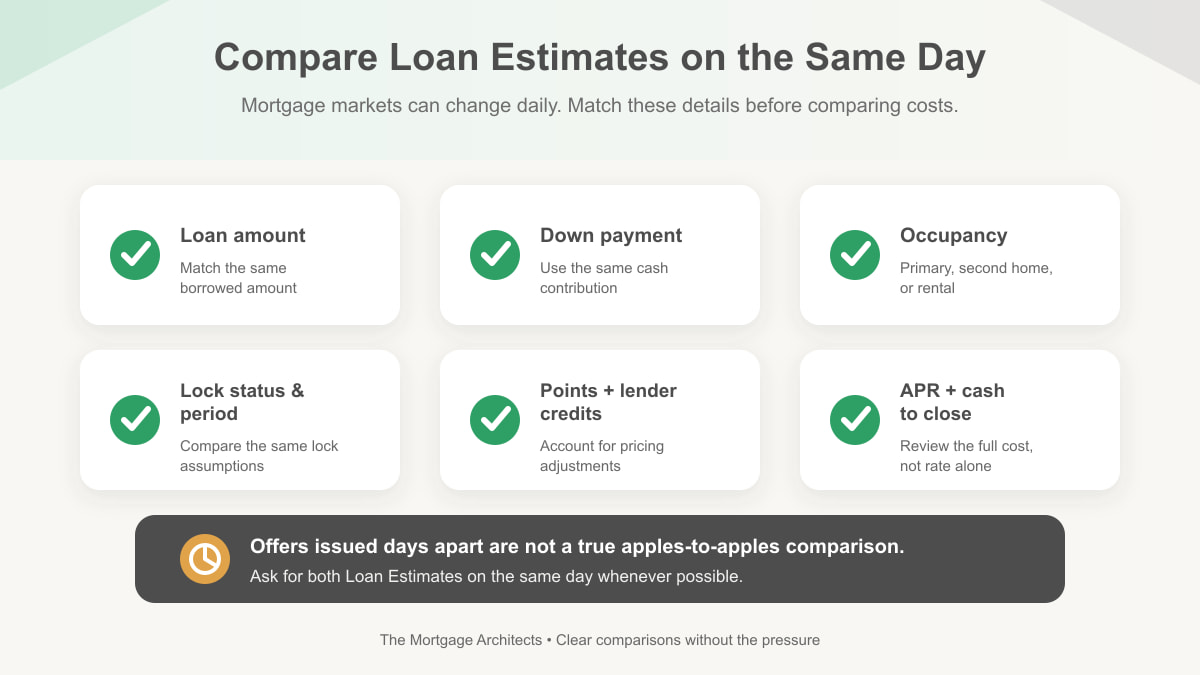
Ask for a Loan Estimate when you are ready to compare formal offers. Review the same loan type, down payment, lock period, and point structure. Then compare:
- Interest rate and annual percentage rate
- Origination charges and broker compensation
- Discount points and lender credits
- Estimated closing costs and cash to close
- Mortgage insurance, when applicable
- Prepayment penalties or other important loan terms
See Whether Paying Points Is Worth It
Compare the upfront cost of mortgage points with the potential monthly savings and estimated break-even period.
Mortgage Points Calculator
Find the break-even month for buying down your interest rate with discount points. The calculator also shows total lifetime savings if you keep the loan past break-even.
Estimated payment
Get your personalized report
Report Sent!
Check your inbox. Your personalized mortgage report is on its way. A PDF copy has also been downloaded to your device.
Want Help Making Sense of Your Loan Estimate?
The Mortgage Architects can review the key numbers with you and explain the tradeoffs.
If anything is unclear, ask. A trustworthy mortgage professional will walk through the numbers without pressure or hidden fees.
Who Is a Good Fit for a Mortgage Broker?
Using a mortgage broker may make sense when you:
- Want one professional to compare multiple lenders
- Are self-employed or have variable, commission, or nontraditional income
- Are buying an investment property or second home
- Have credit concerns or a past financial setback
- Need FHA, VA, conventional, jumbo, or other loan options compared
- Value personal guidance and fast communication
- Want a plan even if you are not ready to buy immediately
When Going Directly to a Bank May Make Sense
A bank or credit union may be the right lender if it offers a relationship discount, a specialized portfolio loan, or a competitive option that clearly fits your needs. Some borrowers also prefer keeping financial services under one roof.
You do not have to decide based on assumptions. Compare the bank’s offer with a broker’s options and evaluate the full cost, responsiveness, and fit.
Why Local Denver and Colorado Experience Matters
Colorado buyers often compete on more than price. A strong preapproval, a realistic timeline, and quick answers can help your offer stand out in the Denver real estate market. Local experience also helps when coordinating with Colorado real estate agents, appraisers, title companies, and property-specific requirements.
The Mortgage Architects combines wholesale lender access with local, personal service from its Denver office. You get a mortgage guide who understands the market and stays available when decisions need to happen—not a call-center handoff every time you have a question.
Meet Nathan Jennison, Founder and Managing Broker

Nathan Jennison founded The Mortgage Architects to create a more transparent, judgment-free mortgage experience. His approach is conversational but grounded in expertise: understand the borrower’s real goals, compare workable solutions, explain the tradeoffs, and build a plan that supports homeownership and long-term wealth.
Nathan is licensed in Colorado and several other states and works with first-time buyers, repeat homeowners, investors, and borrowers whose finances do not fit a typical banking box. The goal is not to push every person into a loan. It is to help you understand what is possible and what next step makes sense.
What to Look for in Reviews
Online reviews can help you choose the right mortgage broker, but look beyond the star rating. Read what clients say about communication, clear explanations, responsiveness, problem-solving, and whether the broker delivered on the promised timeline. Those details reveal more than a generic compliment.
When you review feedback about The Mortgage Architects, pay attention to the experiences of borrowers whose goals or challenges resemble yours. Then bring your own questions to a consultation.
Questions to Ask Before Choosing a Mortgage Broker
- How many lenders do you work with, and how will you narrow my loan options?
- Who pays your compensation, and where will I see it disclosed?
- Which loan types fit my situation, and what are the tradeoffs?
- How will you compare the rate, APR, points, credits, and closing costs?
- What documents will I need for the loan application process?
- Who will update me during underwriting, and how quickly do you respond?
- What happens if the first lender cannot approve the loan?
The best broker will welcome these questions and give direct, understandable answers.
What Working With a Mortgage Broker Looks Like
The process begins with a conversation about your goals—not a sales pitch. You will discuss the property, timing, down payment, income, credit, current debts, and any concerns that could affect the loan. From there, Nathan can explain which loan types and potential lenders deserve a closer look.
When you decide to move forward, you will complete a loan application and provide supporting documents. The broker compares available options, explains the differences, and helps you choose a path. After you receive disclosures and select a lender, the file moves through processing, appraisal, and underwriting. The Mortgage Architects stays involved to answer questions, coordinate requested documents, and communicate with your real estate agent and other closing partners.
A preapproval is not the finish line. Rates, property details, and lender requirements can change during the mortgage process, so clear communication matters. The goal is to spot roadblocks early, keep the file moving, and make sure you understand each major decision before the loan closes.
Preguntas frecuentes
A mortgage broker may be better when you want multiple lenders compared or need a more flexible strategy. A bank may be better when its own product, relationship pricing, and service are clearly competitive. Compare written offers instead of relying on a general rule.
A broker may not add value if you already have a strong direct-lender offer that fits your needs. Some lenders also do not work through brokers. Always understand the broker’s fee structure, lender access, and potential conflicts of interest before proceeding.
Start as soon as you have a property goal—even if you think buying is months away. An early conversation can clarify your budget, identify documentation needs, correct common assumptions, and give you time to improve your options without last-minute pressure.
Yes. A broker can review how lenders may evaluate business and personal income, identify the documents you will need, and compare loan programs. Approval still depends on the lender’s guidelines and your full financial profile.
No mortgage professional can guarantee the lowest rate in every market or situation. Rates change, and the lowest headline rate may come with points or terms that do not fit your goals. Focus on the complete loan offer and the quality of guidance.
Get a Clear Mortgage Comparison—Without the Pressure
You do not need perfect finances or all the answers before asking for help. The Mortgage Architects offers a judgment-free place to explore your options, compare a mortgage broker vs. bank, and leave with a practical plan.
Schedule a 30-minute consultation with The Mortgage Architects to discuss your home purchase, refinance, or investment goals. Come as you are—we will help you understand what is possible and what you can do next.
Ready for a Clear, Side-by-Side Comparison?
Share a few details and The Mortgage Architects will help you understand your mortgage options and the most practical next step.
Compare Your Mortgage Options
Share a few details and The Mortgage Architects will help you understand your options and the most practical next step.
Schedule a 30-Minute Consultation

Related Resources

Why Use a Mortgage Broker?

When is the Right Time to Refinance Your Mortgage?
